
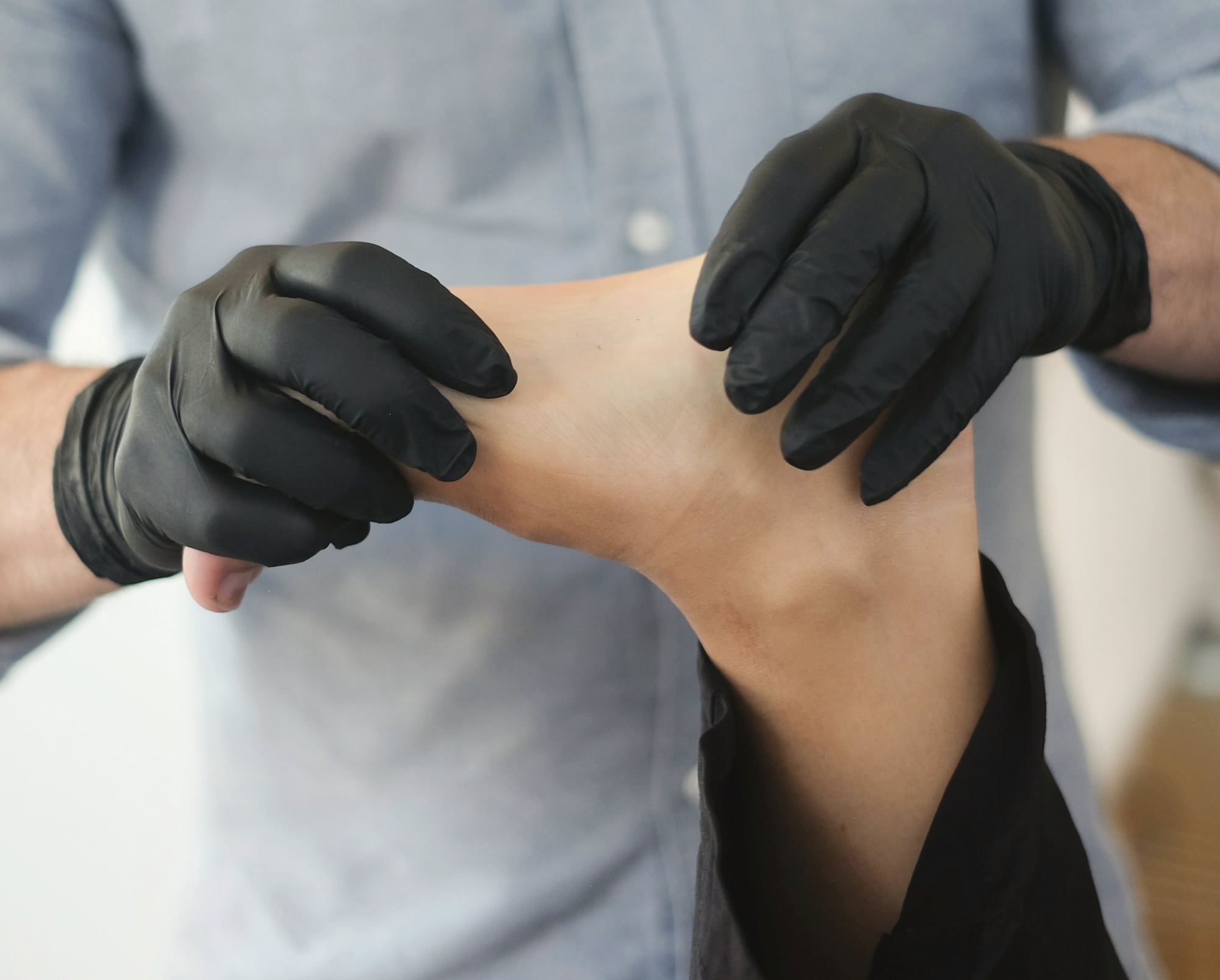
03.1 · Podology treatment
PODÉA Medical
For problems that need an assessment and a treatment plan: nail fungus, ingrown toenails, nail correction and reconstruction. The cross in the mark says exactly this: care with a medical purpose.
Podology and foot care, Prizren
42.2139° N · 20.7397° E

Your feet deserve particular attention. At PODÉA we offer professional podology care, an individual approach and treatment shaped around your needs.
02Why it matters
Your feet carry the weight of your whole body, every day. A thickening nail, a painful callus or a nail edge growing into the skin seem small, yet they change how you walk, work and feel. The earlier they are seen, the simpler the care.
Many nail and skin problems are easier to treat when they are seen early. There is no need to wait until pain becomes part of the day.
Every foot has its own story: shoes, work, sport, chronic conditions. The plan is built on these, not on one protocol for everyone.
When a condition needs a medical diagnosis or therapy, we refer you to the right specialist and continue the podology care alongside.
PODÉA works in two directions that complete each other: treating nail and skin problems, and the regular care that prevents them.
03.1 · Podology treatment
For problems that need an assessment and a treatment plan: nail fungus, ingrown toenails, nail correction and reconstruction. The cross in the mark says exactly this: care with a medical purpose.

03.2 · Regular care
For healthy feet that should stay that way: medical pedicure, care for hard skin and heels, and regular checks for people with diabetes.
From the nails to the skin of the sole, every service starts with an assessment and ends with clear guidance for care at home.
Nail fungus is one of the most common reasons people visit a podologist. It can be treated, but it takes an accurate diagnosis, patience and a plan that is followed through.
Onychomycosis
A thickened nail, yellow, white or brown in colour, that breaks easily or lifts from the nail bed. Sometimes with an unpleasant smell or discomfort in shoes.
Not every changed nail is fungal. Trauma, psoriasis and other conditions can look the same. When medication is planned, laboratory confirmation through a doctor is recommended.
The affected nail plate is cleaned and thinned, pressure is relieved and the nail is prepared so topical treatment can work better. Prescription therapy is decided by a doctor.
A healthy nail grows slowly. Results appear gradually, with regular check-ups and prevention, because fungus can return.
How fast a big toenail grows
A big toenail is usually fully replaced within 12 to 18 months. That is why treatment takes time.
Cases from our practice, published with our patients' consent.
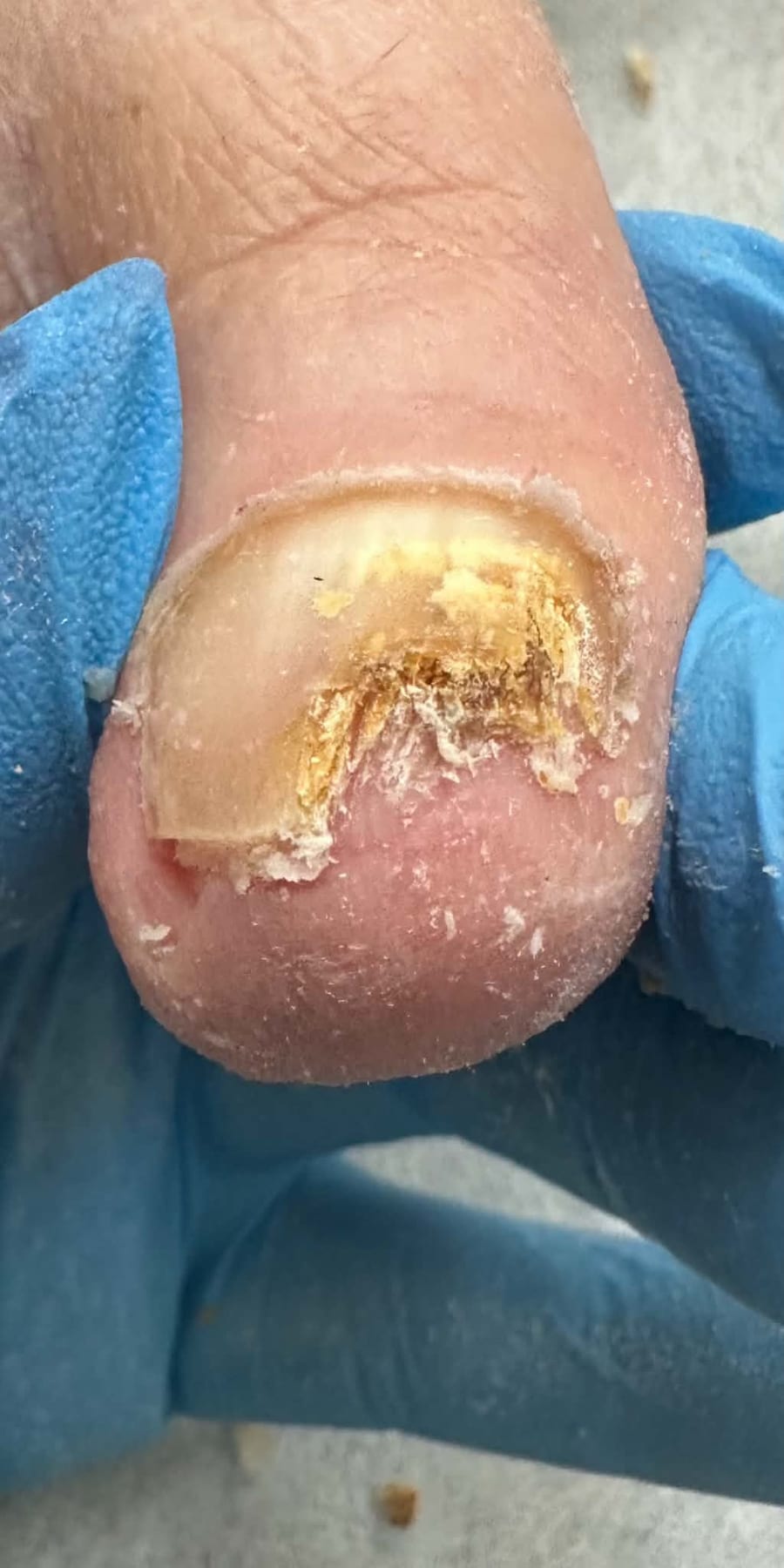
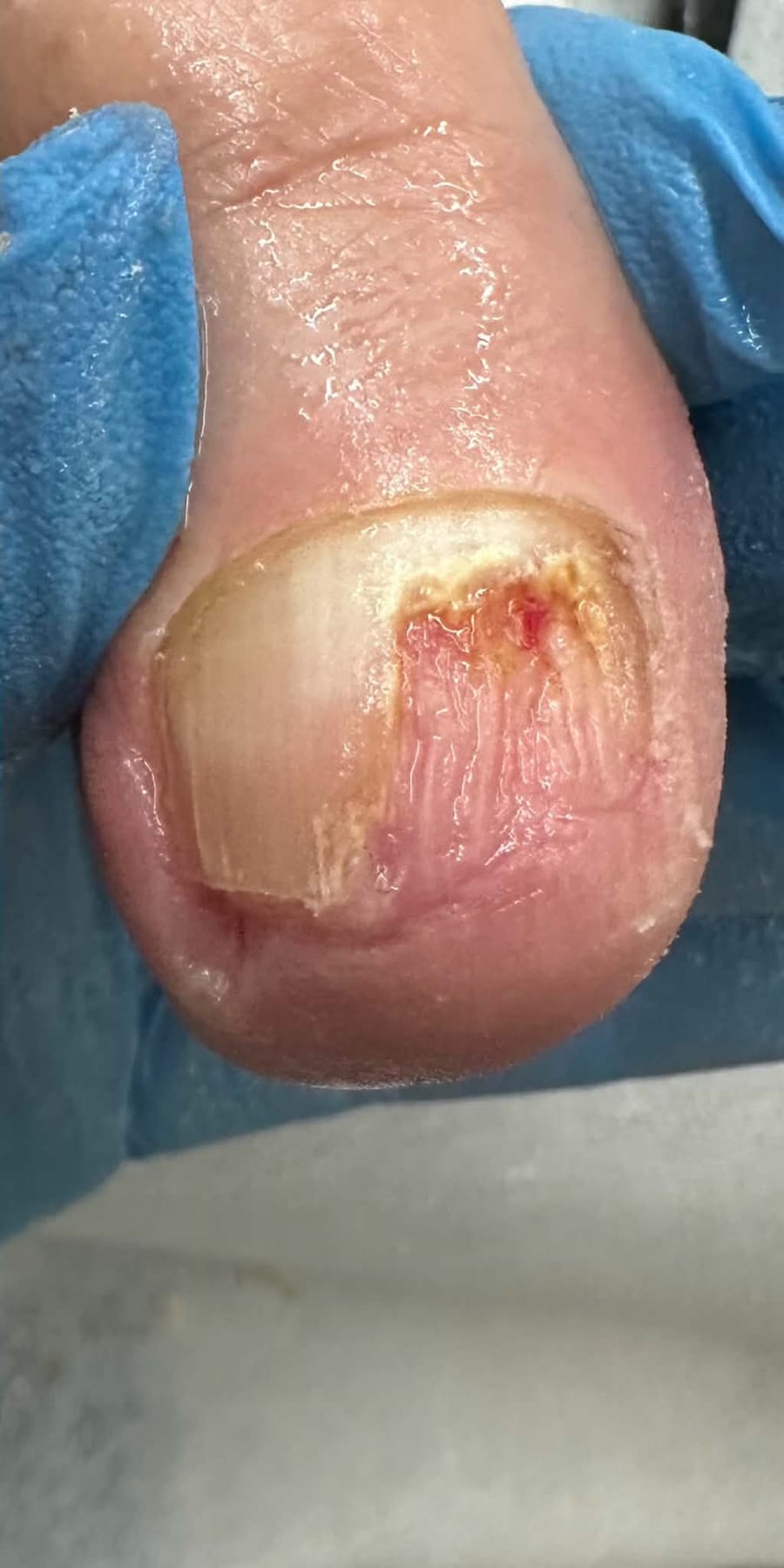
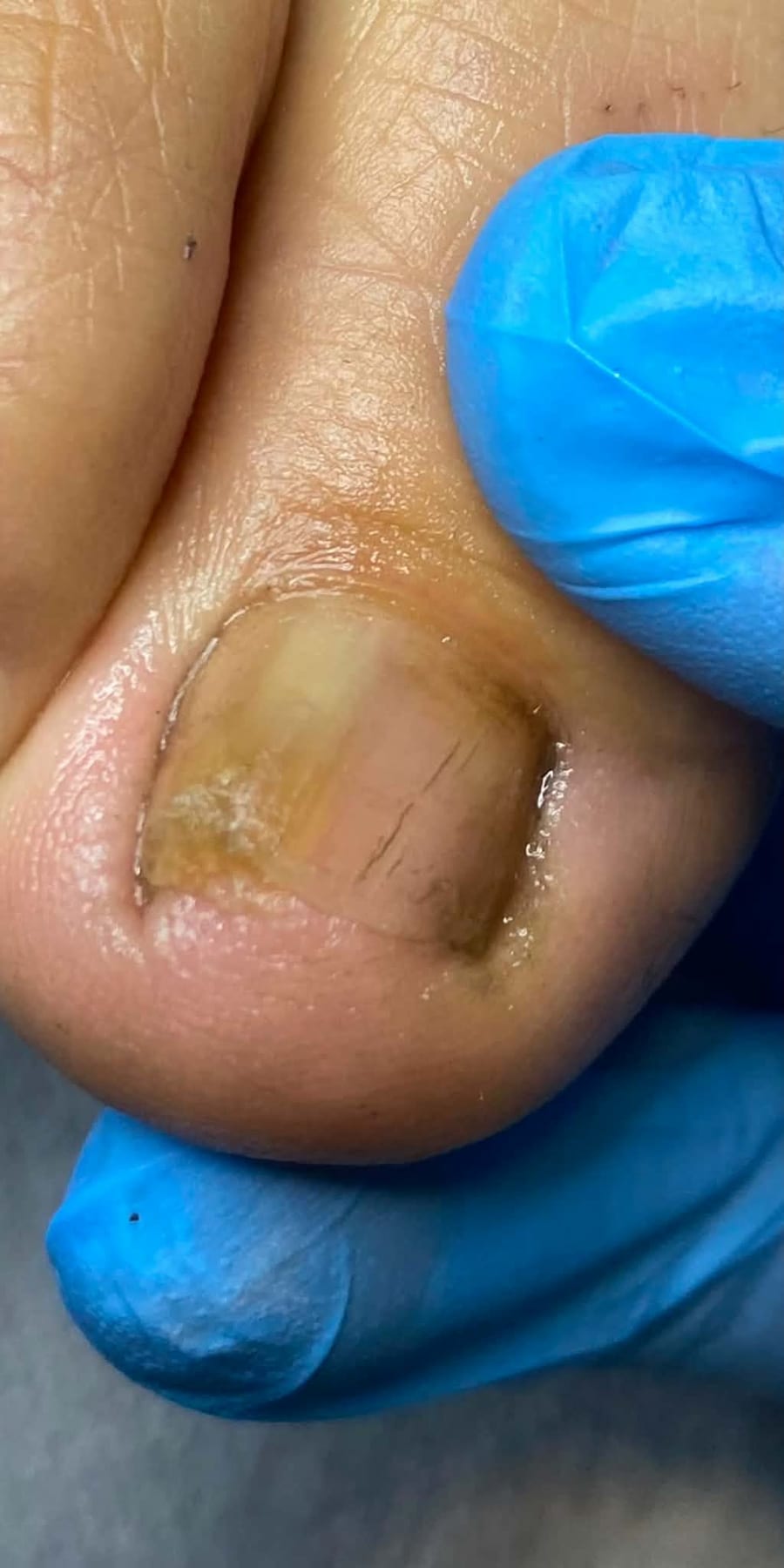
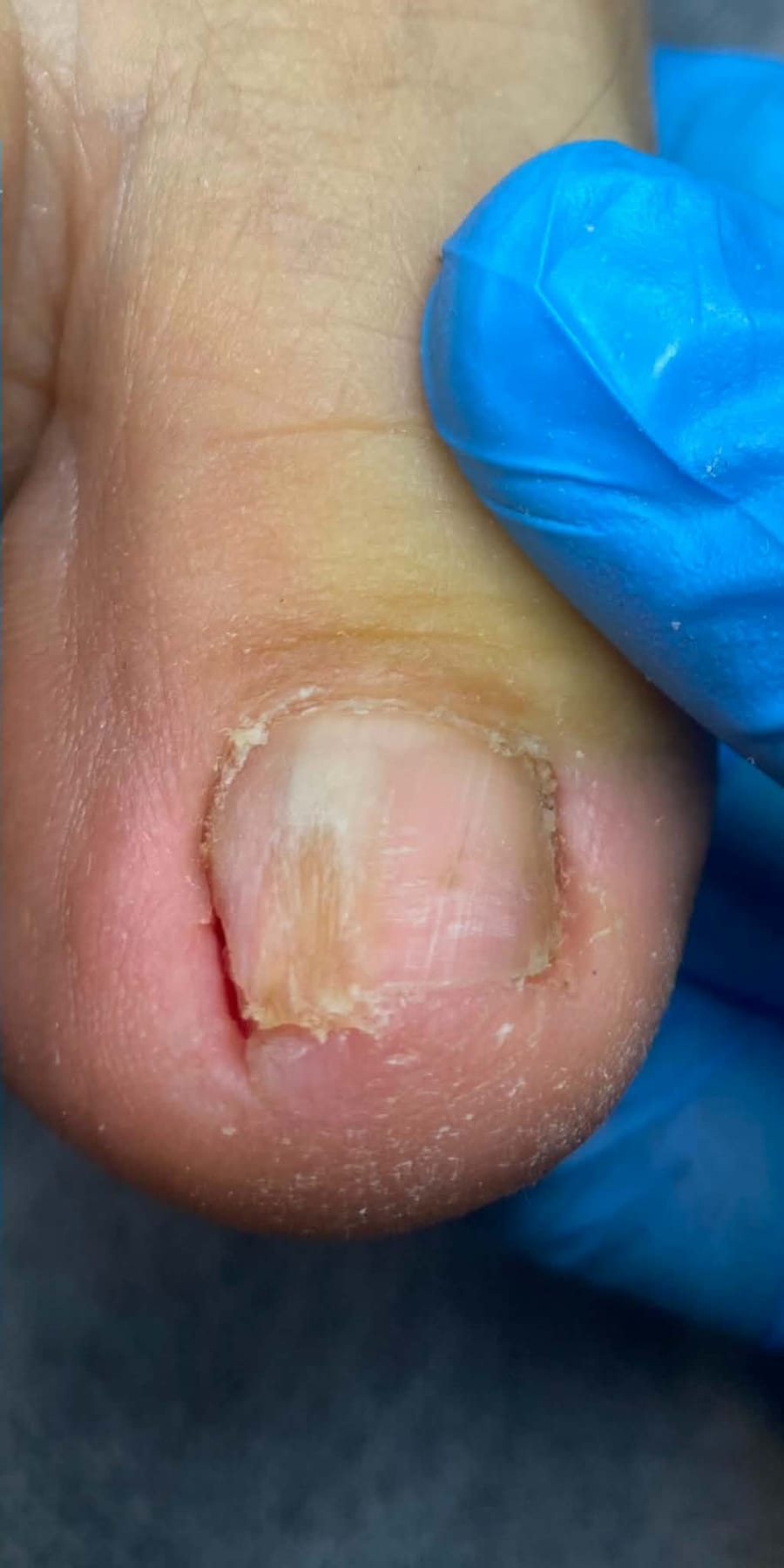
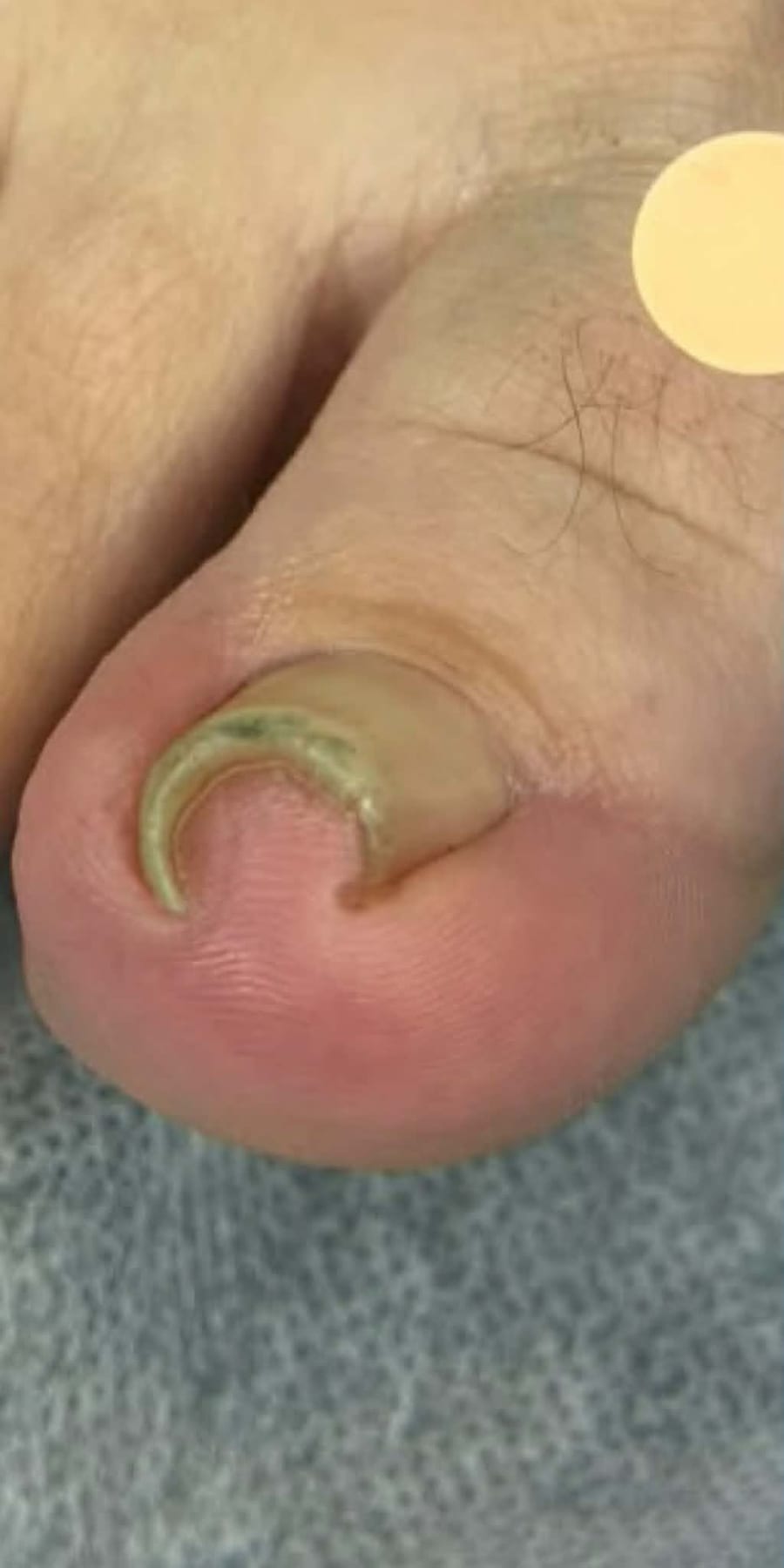
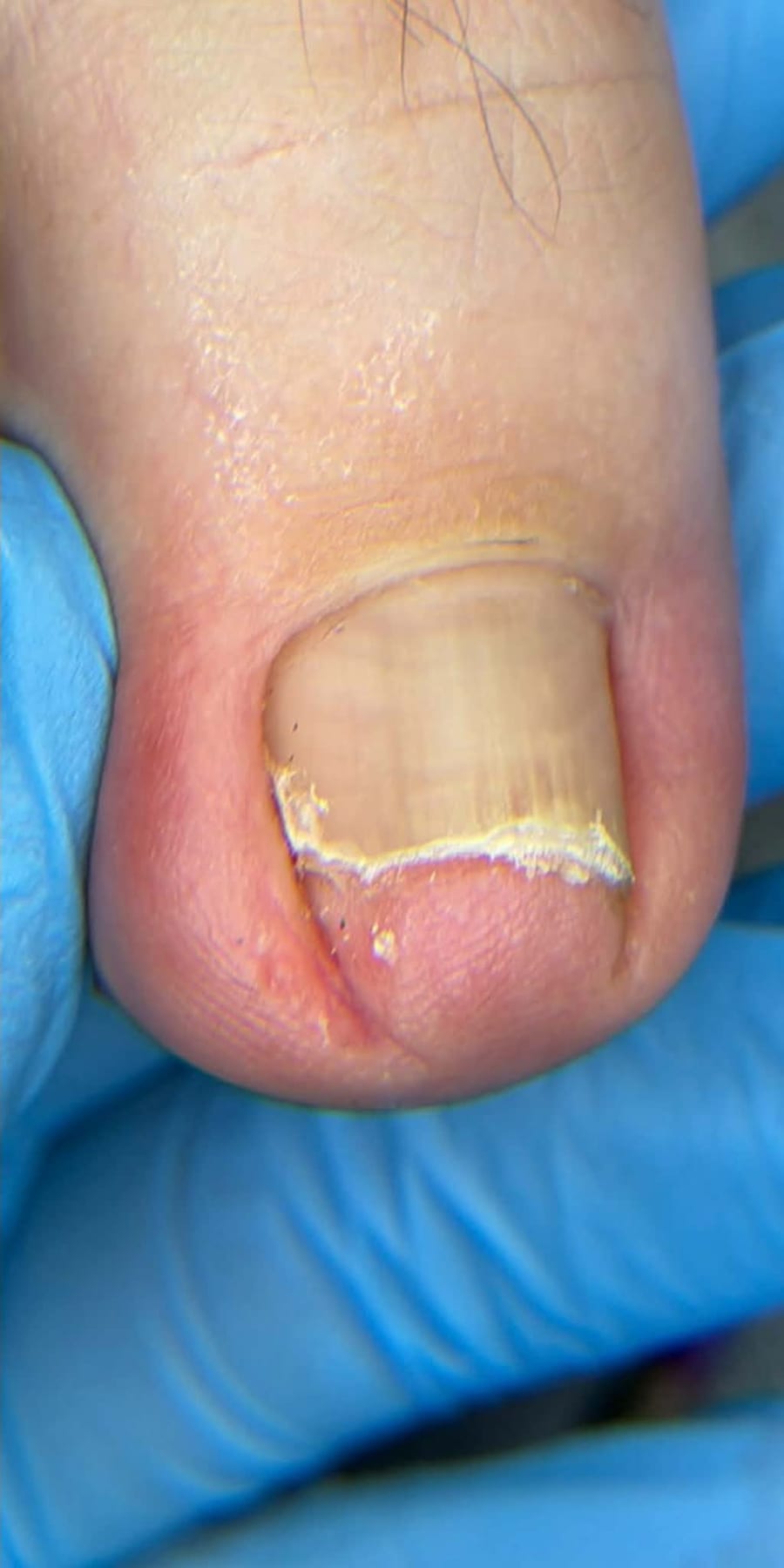
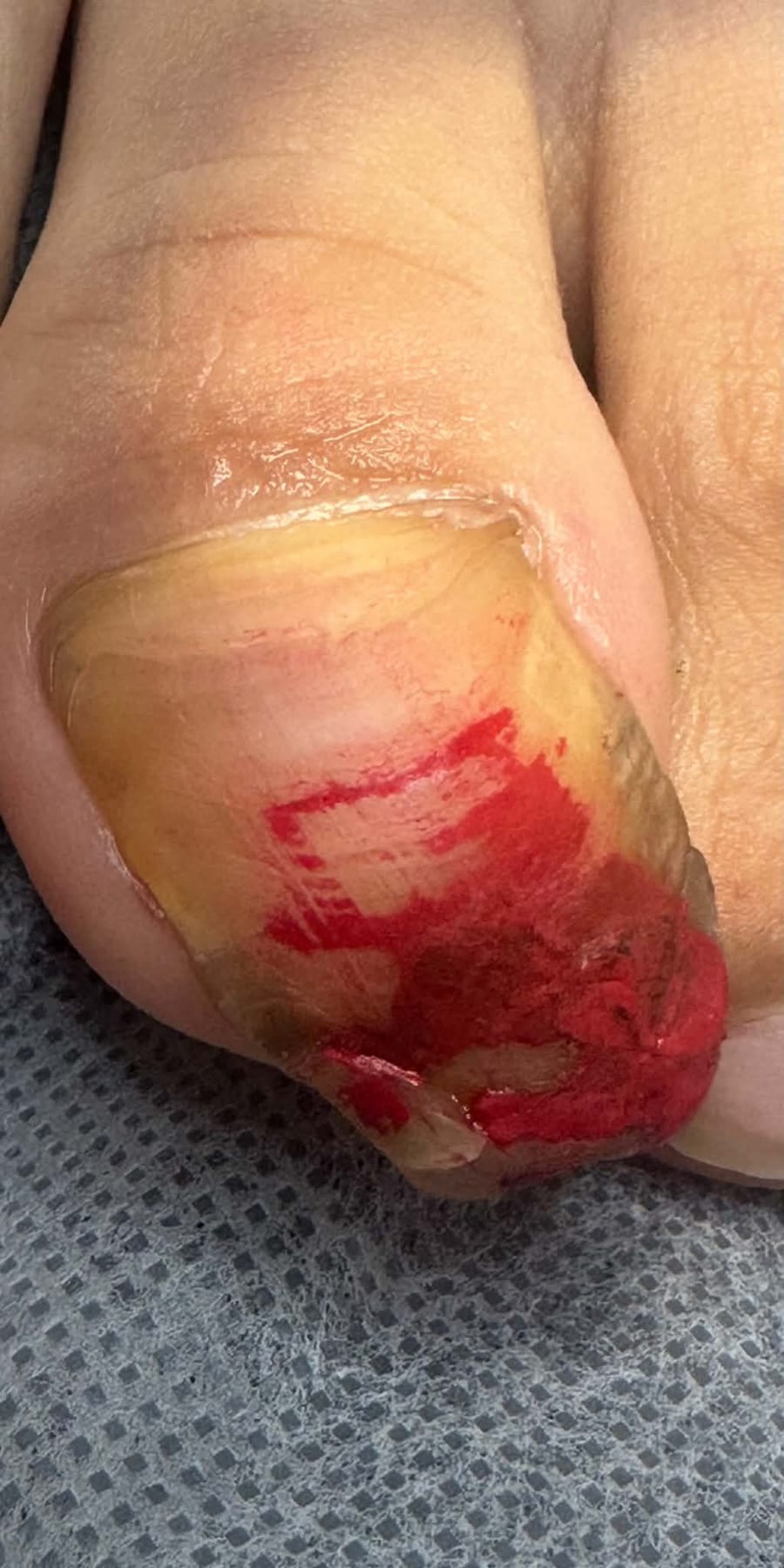
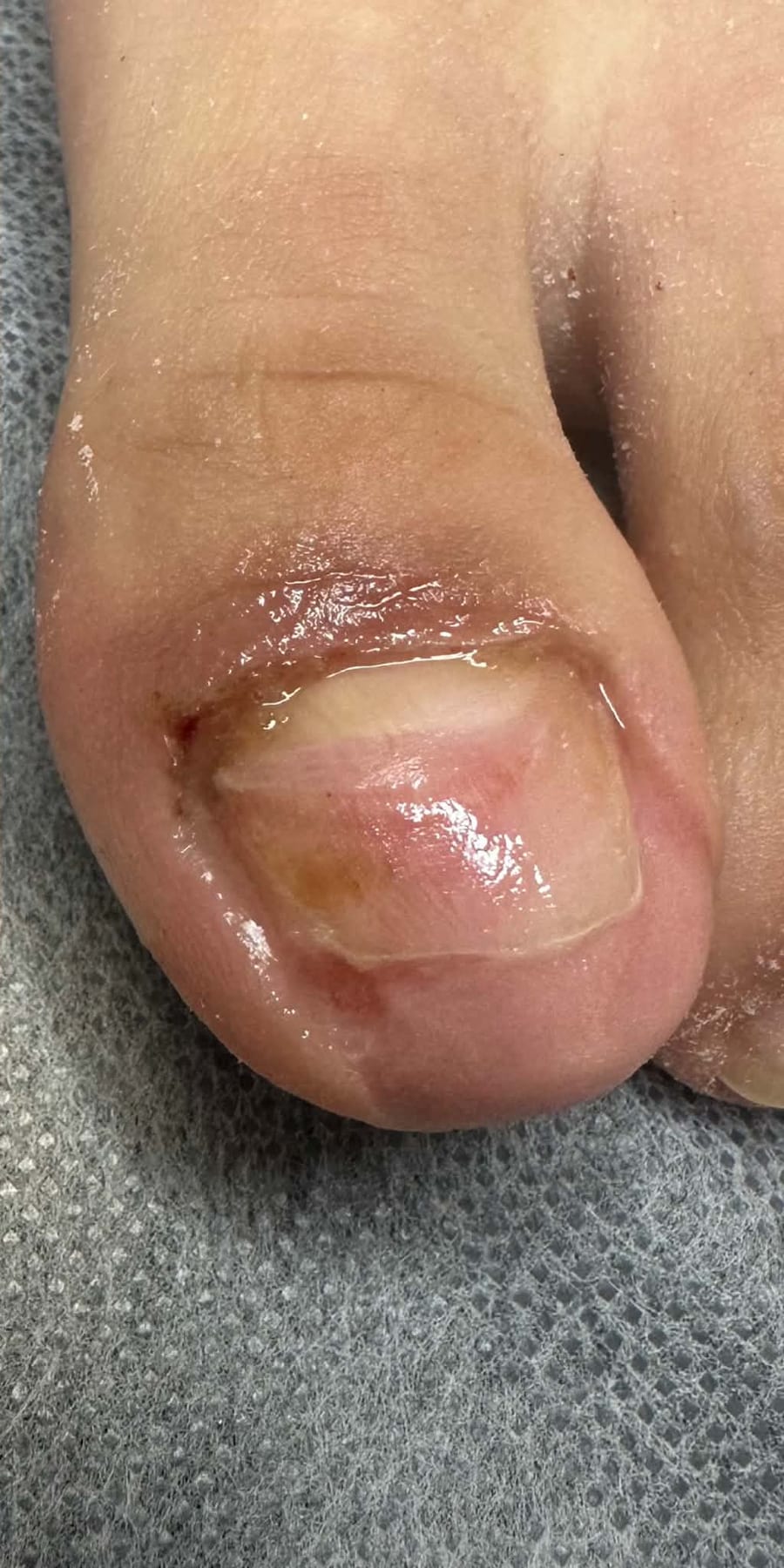
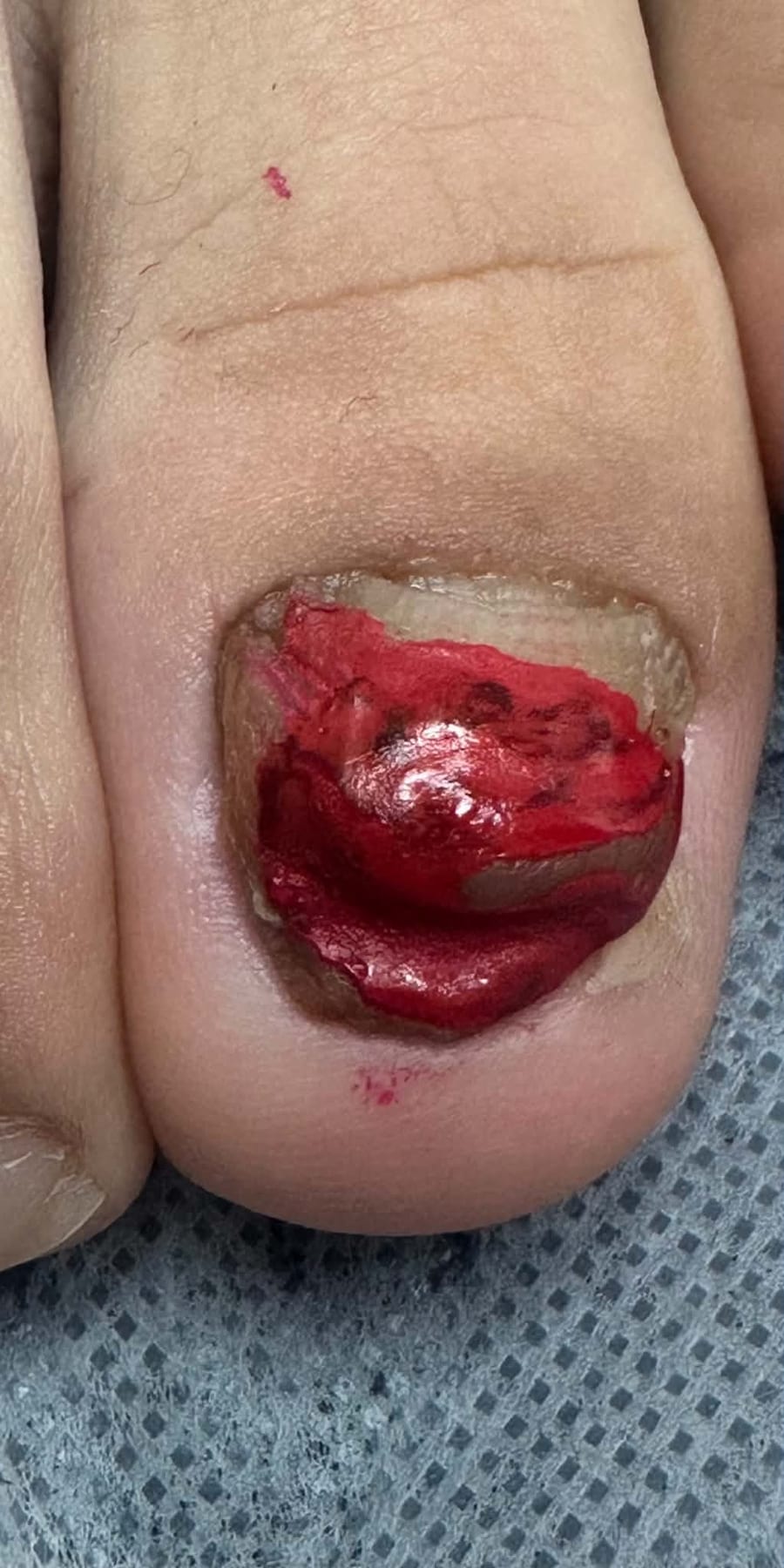
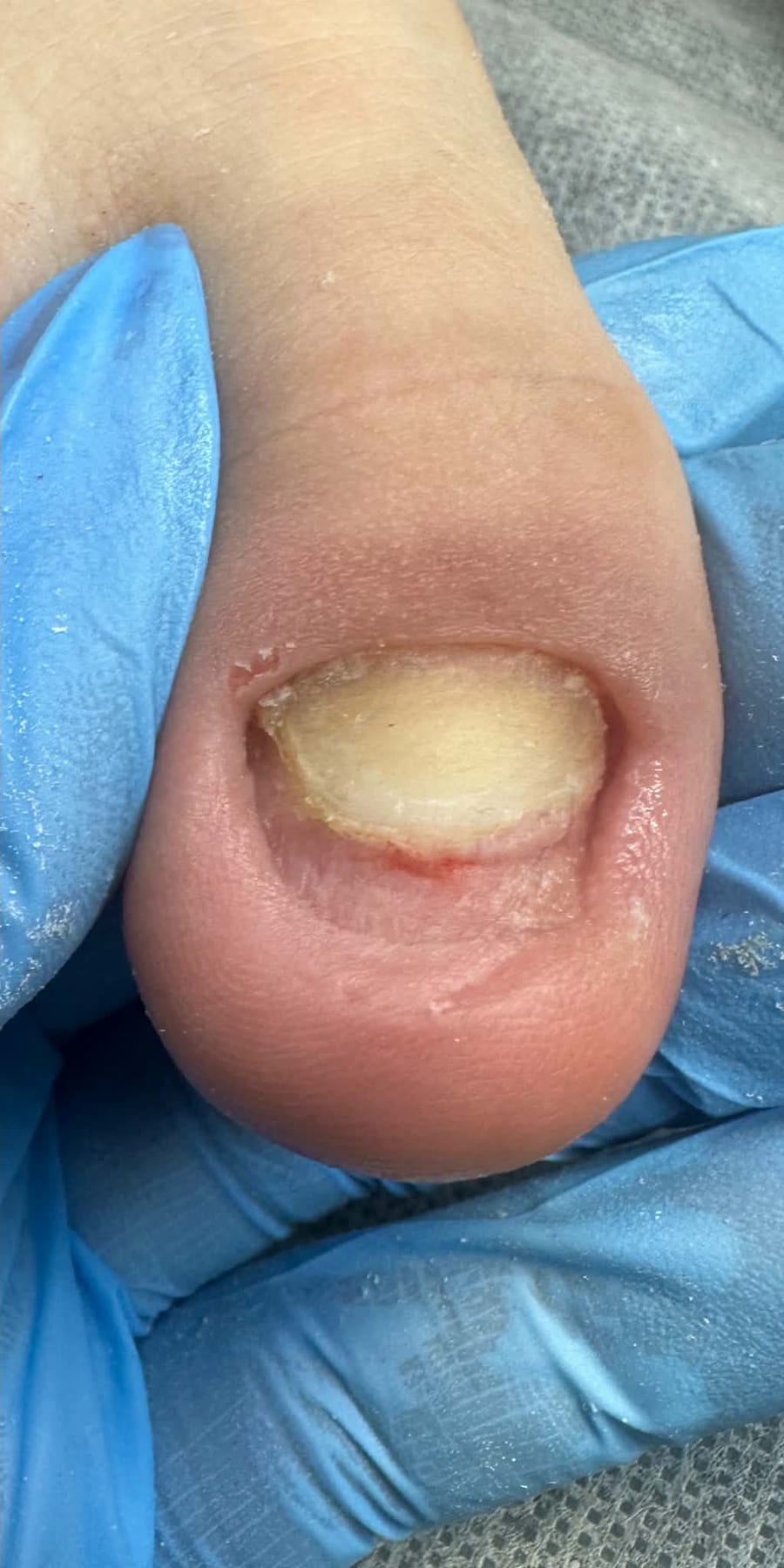
Results vary from person to person and depend on the starting condition.
Choose one or more signs. We will show you which services relate to them.
This guide is not a diagnosis. It helps you find your way before a consultation.
We talk about your concern, health history, shoes and routine. Then we examine your feet carefully, in a calm setting.
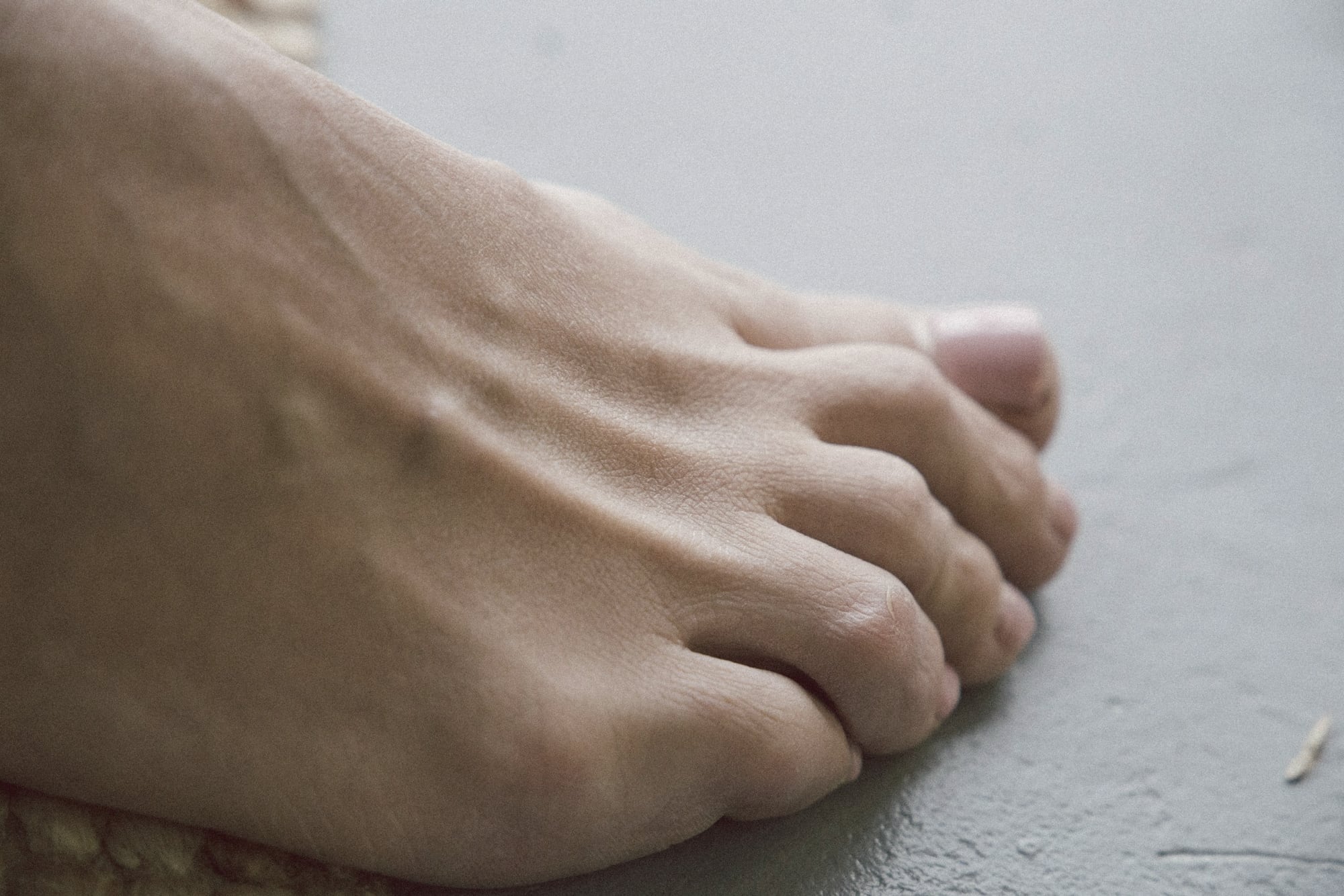
We explain clearly what we see, what can be done and how long it may take. If a doctor is needed, we tell you from the start.
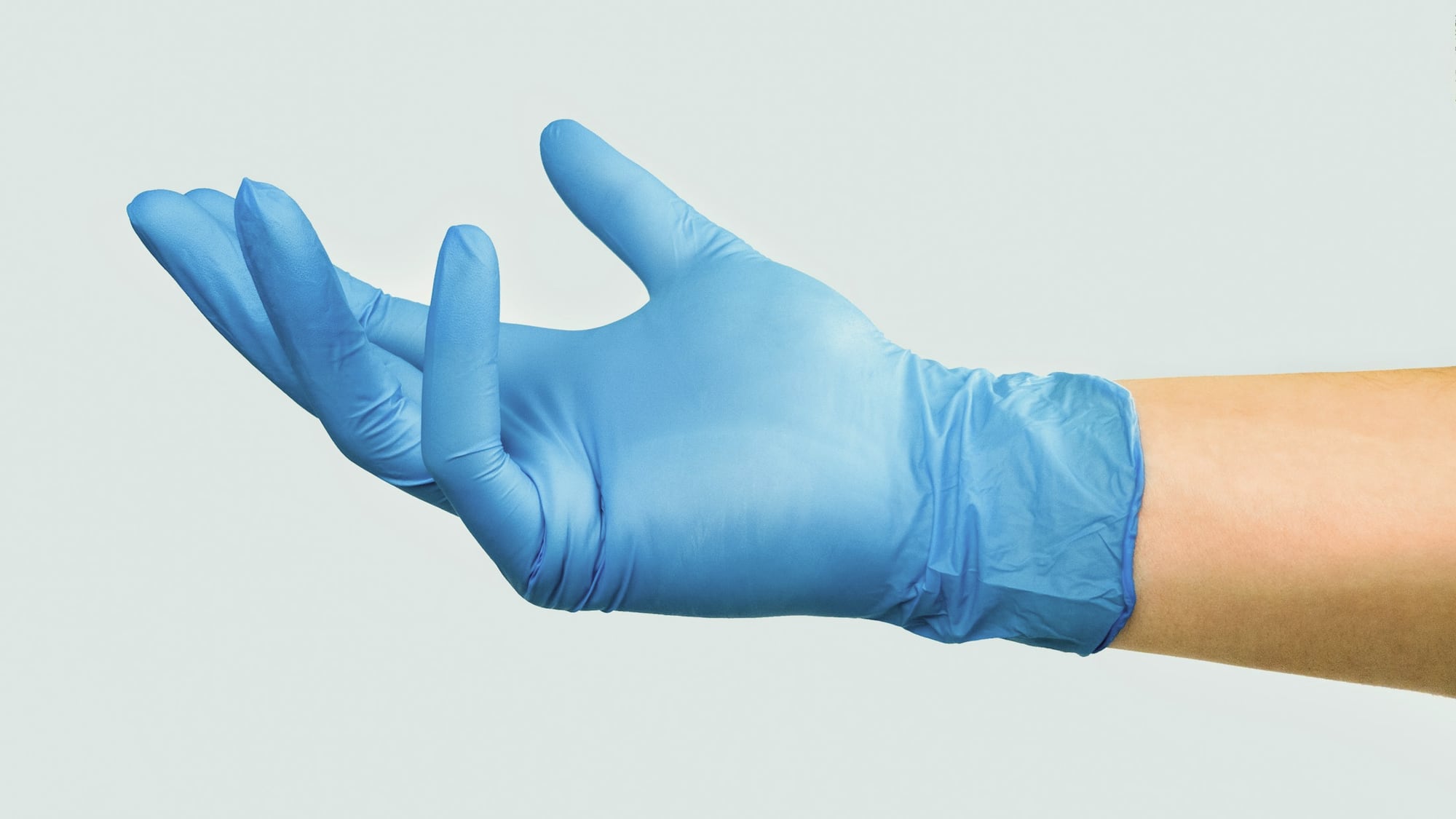
Treatment uses instruments prepared for each patient. Afterwards you receive guidance for home care and, when needed, a follow-up appointment.

Four things we never leave to chance.
Your appointment time is yours. We do not work at the pace of a salon, but at the pace your foot needs.
Instruments are cleaned and sterilised after every patient. Single-use materials are used once.
We tell you what we are doing and why. No unnecessary jargon and no promises that cannot be kept.
Podology is healthcare. We treat it with the seriousness, precision and continuity it deserves.
No. You can book directly. If we see during the consultation that a doctor is needed, we refer you to the right specialist.
Most podology treatments are well tolerated and done without anaesthesia. When an area is inflamed, you may feel discomfort. We explain every step and pause whenever you need.
Not quickly. The new nail grows slowly, and full replacement of a big toenail usually takes 12 to 18 months. Improvement appears gradually.
Not as a stand-alone treatment. We have blue light and Gold Platinum equipment, but use it only as a complementary part of the plan. Diagnosis and medical therapy remain the foundation.
Yes, and regular care is recommended. Tell us about your diabetes and medication when you book. Wounds and infections are treated by a doctor.
Book online. We will contact you to confirm your appointment.